





May 12/26 18:21 pm - Cycling Canada is Losing Athlete Trust - Part 2
Posted by Editor on 05/12/26
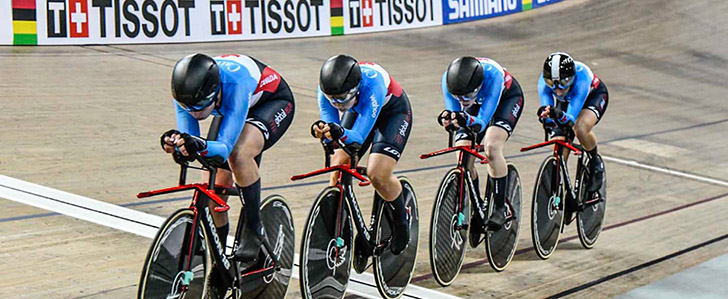
This is a long one, so I've broken it into two parts - Part 1 provided a synopsis of the situation regarding the Women's Team Pursuit program, and Part 2 (this one) is how this decision and, more importantly, how it was communicated, is negatively impacting the relationship with its athletes.
Part 2
I do feel that Cycling Canada made a massive FAIL in how it managed and communicated the decision to the athletes. There was no involvement of athletes in the decision making, or in offering them the opportunity to propose alternatives to the decision to not send a team to the Worlds. Maybe if they had been given the opportunity to participate (or even just be taken through the decision making process), there might have been some buy-in.
I have watched, reported on and known athletes in Canada's high performance program for over 40 years and I can attest that dedicated athletes put everything into their preparation and performances. They put their trust in the coaches, high performance staff, and the staff of the federation - it's a contract that the athletes make: they will do their best and the staff will provide the support they need.
So, what do you think it does to that trust when the athletes in a program are told, with no warning and no discussion, that their major goal of the year has been yanked?
As part of the athlete response, they stated:
"This decision directly contradicts prior communication from Cycling Canada leadership. In an email dated April 8, 2026, Sebastien Travers [Interim Chief Technical Officer] stated: 'Our first priority is maintaining participation in the world championships in all the disciplines in which Canada is traditionally represented.' "
Further on, they point out: "In addition, there are serious concerns regarding communication and athlete preparation. At the preparatory camp in Milton ahead of the Hong Kong World Cup, athletes were explicitly advised by coach Phil Abbott that the team pursuit result would not be a determining factor, provided the team competed. Based on this direction, the strategic focus of the camp shifted toward bunch race preparation. If athletes had been informed that team pursuit performance at that event would directly influence the continuation of the program toward the LA 2028 Olympic Games, preparation priorities would have been adjusted accordingly. The athletes were therefore given direction that did not align with the criteria now being applied, and are being evaluated retroactively under conditions that were not communicated in advance."
Individually, riders are also displaying a sense of hurt and betrayal. Ariane Bonhomme, a two-time Olympian in the program, announced in January that she was retiring and now, after this decision about the program, spoke in detail what led to her decision: "When I announced my retirement in January, I opted to stay quiet about what I had experienced over the past few years because I thought moving on was the healthier thing to do.
"But after everything that has unfolded this past week with the Canadian Women's Team Pursuit, I feel like it is time to speak out.
"Back in December, I was told through a generic email that I would no longer receive Sport Canada funding for the 2026 season.
"As a two-time Olympian, I was disheartened by not only the decision, but how it was communicated to me. No phone call, no in person meeting, just an email that after 13 years I was no longer funded.
"So I quietly accepted it. I still wanted to go to the LA Olympics, but decided not to fight for a spot within an organization that did not value me."
Ariane goes on to say: "I am in a unique position where I have experienced the women's team pursuit program through both its highest highs and lowest lows. And I can confidently say this:
"The decline of the program has nothing to do with the strength, talent, or commitment of the riders. It has everything to do with how the program has been managed over the past several years.
"My heart hurts for these girls who were ready to put in the work and deserved the opportunity to fight for something bigger together."
Lily Plante, one of Canada's brightest new track endurance stars, with a gold and three bronze medals at the recent Track Nationals, wrote:
"Over the last 6 years, I gave everything I had to the Canadian track program.
"Like many others on this team, I sacrificed financially, physically, mentally, and personally to represent Canada on the international stage. I paid thousands of dollars out of pocket to race across the world, qualify spots for Worlds, and keep this program alive because I believed in what it could become.
"What hurts the most is not just the cancellation itself, it's the lack of accountability and support that led us here."
I had the chance to speak with Mathieu Boucher earlier today - Mathieu is the new CEO at Cycling Canada, but was not involved in this high performance decision.
He explained to me that due to the performance gap, which it was felt was unlikely to be closed, there was a decision to reallocate resources to development and supporting the program for the future, and more specifically the next Olympic cycle (although he stressed that 2028 was not off the table).
I put it to Mathieu that the way this decision was communicated was poor, and he agreed that it was an issue:
"From the comments and the feedback we received, clearly from a communications standpoint there is some learning for us. My expectation as the CEO is very clear: each program should have clear performance goals and clear expectations to the athlete. There seems to certainly be a gap there, and that's something we need to address."
I also asked if he was worried that this situation could negatively affect the program going forward, as evidenced by some of the feedback from athletes:
"With some of the misinformation circulating it is not positive for us or the program. But this also brings a huge opportunity for these up-and-coming athletes and for us to share what is our vision, what is our goal, and how we are going to get there together. There's a path forward absolutely, and this is why we are making this shift now; we don't want to wait another year or two years, and do the same thing again and produce the same level of results. That would be unacceptable.
"We are in this situation because for the past few years all our money had to go to deliver programming for the elite team; there was no money left to do development, there was nothing to do training camps, and now we are in the situation where our pool of athletes is very thin and we need to rebuild back."
The decision made to pull back in the short term to build a more substantial base for the long term is very much a defensible one that may have been accepted by the athletes, but I fear the top-down, heavy handed method Cycling Canada used may face strong headwinds going forward.
Cycling Canada is Losing Athlete Trust - Part 1
| Return to Canadian Cyclist homepage | Back to Top |